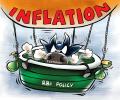
'Election years tend to see high government expenditure on unproductive schemes, though that money sloshing around can boost private consumption.' 'Again, it can mean higher inflation,' explains Devangshu Datta.

He said the short term macroeconomic priorities of the RBI continue to focus on bringing down inflation towards the government-set target of 4 per cent

The previous high GDP growth of 8.1 per cent was recorded in April-June quarter of 2016-17.

The RBI had lowered policy rates by 0.50 per cent between January-March to prop up economic growth.
Managing expectations is a challenge for policymakers.

Growth in India is expected to remain strong and stable in 2015

The international community counts a lot on India's leadership of the G-20 at a time when the world is faced with the continued economic slowdown and social distress, the chief of the International Monetary Fund Kristalina Georgieva has said. "India, which is the president of G-20 countries, remains among the countries that perform better than the global average and by a good percentage," IMF managing director Kristalina Georgieva told reporters during a media roundtable on Thursday. India formally assumed the G20 (Group of 20) Presidency on December 1.

In a memorable year for the equity market, Dalal Street investors added a whopping Rs 81.90 lakh crore to their wealth in 2023 as a raft of positive factors powered a stellar rally in stocks. Experts said India's strong macroeconomic fundamentals, political stability owing to the BJP's success in recent elections in three significant states, optimistic corporate earnings outlook, signals from the US Federal Reserve about three prospective rate cuts next year and heavy retail investors participation played a major role in fuelling the stock market rally in 2023. In the year 2023, the 30-share BSE Sensex jumped 11,399.52 points or 18.73 per cent.

The downgraded World Bank forecast follows a similar move by the International Monetary Fund, which cut its growth forecasts two months ago

Unless RBI temporarily relaxes the norms on recognising of bad loans, the pressure on this front could rise in the December quarter.

The new government that presents the full Budget for 2024-2025 in July should be ready to restructure the way divestment is managed and implemented, proposes A K Bhattacharya.

Rajan also said the outlook for agriculture is subdued, in view of both rabi and kharif prospects being hit by monsoon vagaries.

Housing Development Finance Corp (HDFC) chairman Deepak Parekh on Tuesday said that while the country's macroeconomic fundamentals remain strong and the recovery is in progress, the unpredictability of coronavirus will remain a key challenge. Owing to the second wave, the Indian economy is likely to mirror a similar trend seen in FY21, where the first half of the financial year is weaker and the second half is significantly stronger, he said. "I remain confident that India's macroeconomic fundamentals are strong. Recovery is underway," Parekh said while addressing the 44th annual general meeting of HDFC Ltd. He said, the country's forex reserves and foreign direct investment inflows have scaled record highs, the capital markets are also buoyant and agriculture growth is expected to remain strong with food grain production estimated at over 305 million tonnes.

Part of periodic Article IV consultations on state of the economy; team to have discussions with government as well as banks, private investors and civil society

With economic activity buoyed by expectations from the new elected government of "Prime Minister Narendra Modi, India is benefiting from a 'Modi dividend'," the Bank said in its twice-a-year South Asia Economic Focus report on Monday.
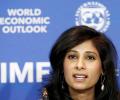
The IMF on Tuesday cut India's economic growth forecast by 0.5 percentage points to 9 per cent for the current fiscal year, with its chief economist Gita Gopinath saying that the slight downgrade is mainly due to the impact of the spread of the Omicron variant. "If you look at the 2021-22 fiscal year, we have a slight downgrade of -0.5 percentage points and for the next fiscal year 2022-23 we have a slight upgrade of 0.5 percentage points. So, growth for the previous fiscal year is now nine per cent and for this year now is at nine per cent. We moved it up slightly," Gopinath told reporters during a news conference in Washington. In its latest update of World Economic Outlook on Tuesday, the International Monetary Fund has cut India's economic growth forecast to 9 per cent for the current fiscal year ending March 31, joining a host of agencies which have downgraded their projections on concerns over the impact of the spread of Omicron on business activity and mobility.

India Inc on Tuesday expressed disappointment over the Reserve Bank increasing the key rate by 0.25 per cent and hoped that banks would refrain from hiking lending rates as such a move will scuttle economic recovery.

Expressing disappointment over the contraction in industrial growth in October, India Inc has appealed to the Reserve Bank to cut interest rates to revive the manufacturing sector and ameliorate investments.

Global gold demand has seen a year-on-year decline of 8 per cent during the April-June period to 948.4 tonnes and going ahead further monetary tightening and continued dollar strength may pose headwinds, says a report. According to the WGC Gold Demand Trends Q2 2022 report, the total gold demand during the second quarter of 2021 stood at 1,031.8 tonnes. The year-on-year demand was affected by increase in gold electronic traded funds (ETFs) outflow, decline in Central banks buying and lower demand from the technology segment, the report said.

Mid- and small-cap indices have outperformed the frontline benchmarks - the S&P BSE Sensex (up around 10 per cent) and the Nifty50 (13 per cent) - in the first half of calendar year 2021 (H1-CY21) by rallying 26 per cent and 39 per cent, respectively. The trend, analysts believe, is likely to continue in H2-CY21 as well. The outperformance in H1-CY21 comes on the back of improved earnings and strong inflows from the foreign portfolio investors (FPIs) in Indian equities. However, good monsoon so far, gradual opening up of the economy and the pick-up in the pace of vaccination provides support to the market.
The idea is to boost household savings and turn more of them into growth capital. If the plan succeeds, sustained eight per cent-plus rates of gross domestic product growth should be within reach in a few years.

Exports declined for the fourth-consecutive month by 10.3 per cent year-on-year to $34.98 billion in May, while the trade deficit widened to a five-month high of $22.12 billion. According to the data released by the commerce ministry on Thursday, key export sectors recording negative growth include petroleum products, gems and jewellery, engineering goods, ready-made garments of all textiles and chemicals. Imports also declined 6.6 per cent, six-month in a row, to $57.1 billion against $61.13 billion in the same month last year, the data showed.

RBI governor Raghuram Rajan and the government are working towards financial inclusion.

Because of India's weak fiscal position, the plethora of debt-burdened infrastructure companies and the poor asset quality of public sector banks, economic growth in 2015-16 may be limited to about six per cent, say Shankar Acharya.

Is the worst over for Indian banks? The past two years saw them ride on treasury trades as deposits soared and credit growth dipped sharply. Gross and net non-performing assets (NPAs) moved south, and the provision coverage ratio (PCR), capital buffers, and profitability indicators are back at pre-pandemic levels. So, what's the plot ahead?

'The rupee falling from 69 to 72 was not normal or justified by the fundamentals.' 'And therefore I treat this as temporary.'

The Finance Ministry expects GDP growth to be 8-8.5 per cent in 2015-16.

'We get to know secrets such as some of India's top-rated firms do not always make payments when due and many State-owned, listed, enterprises that borrow in bond markets default regularly.' 'Without naming the bank, he says that ever-greening of poor loans by a part of India's shadow banking lay at the doorstep of India's banking, notably 'one private bank'.' Viral Acharya's Quest for Restoring Financial Stability in India won't be music to many ears, observes Tamal Bandyopadhyay.

Industrial production re-entered the negative territory by contracting 1.6 per cent in January, mainly on account of the decline in output of capital goods, manufacturing and mining sectors. The output of the manufacturing sector -- which constitutes 77.6 per cent of the Index of Industrial Production (IIP) -- shrank by 2 per cent in January, as against a growth of 1.8 per cent during the same month last fiscal, as per data released by the government on Friday. The worst performance was witnessed by the capital goods sector, which recorded a contraction of 9.6 per cent during the month under review, compared to a 4.4 per cent decline a year ago.

How do we get back to higher trend growth? The heart of the problem lies in private corporate investment, recommends Ajay Shah.
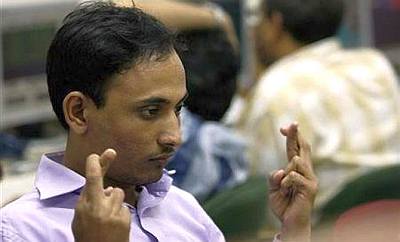
The Bank suggested reforms in infrastructure sector.

'You may see some movement indicating a simpler tax regime with less exemptions but with fewer tax rates making life simpler for taxpayers.'

The earlier government was blamed for non-performance, the current one will be rightfully blamed for mismanagement

RBI has cut the rates thrice so far in 2015 by 25 bps each.

Moody's listed six agenda on the list of pending reforms -- land acquisition Bill, labour law reforms, significant infrastructure investment, tangible benefit from Make in India initiative, tax administration and PSU bank reforms

SBI was the biggest loser in the Sensex pack, shedding 2.40 per cent, followed by Yes Bank, Bharti Airtel, L&T, Sun Pharma, M&M, ICICI Bank, ONGC, RIL, Asian Paints, Vedanta and HUL, which lost up to 2.37 per cent.

'Nationalism built on divisiveness cannot strengthen the country, or help the economy improve its performance,' points out T N Ninan.

Experts caution against tough times in Indian equity markets in 2015.
'Since the growth is not fast enough to provide jobs for the young, the fallout will be political and social,' warns T N Ninan.

Industrial ouput, however, was seen falling 0.6 per cent in January
